TELRPC

Wallet

TELRPC WalletWallet KitPaper walletTop upHelp

Partners

Wallet makersInstitutionsIntegrationsBuild

Technology

How it worksSecurityCoverageAbout

More

DocumentsContact us
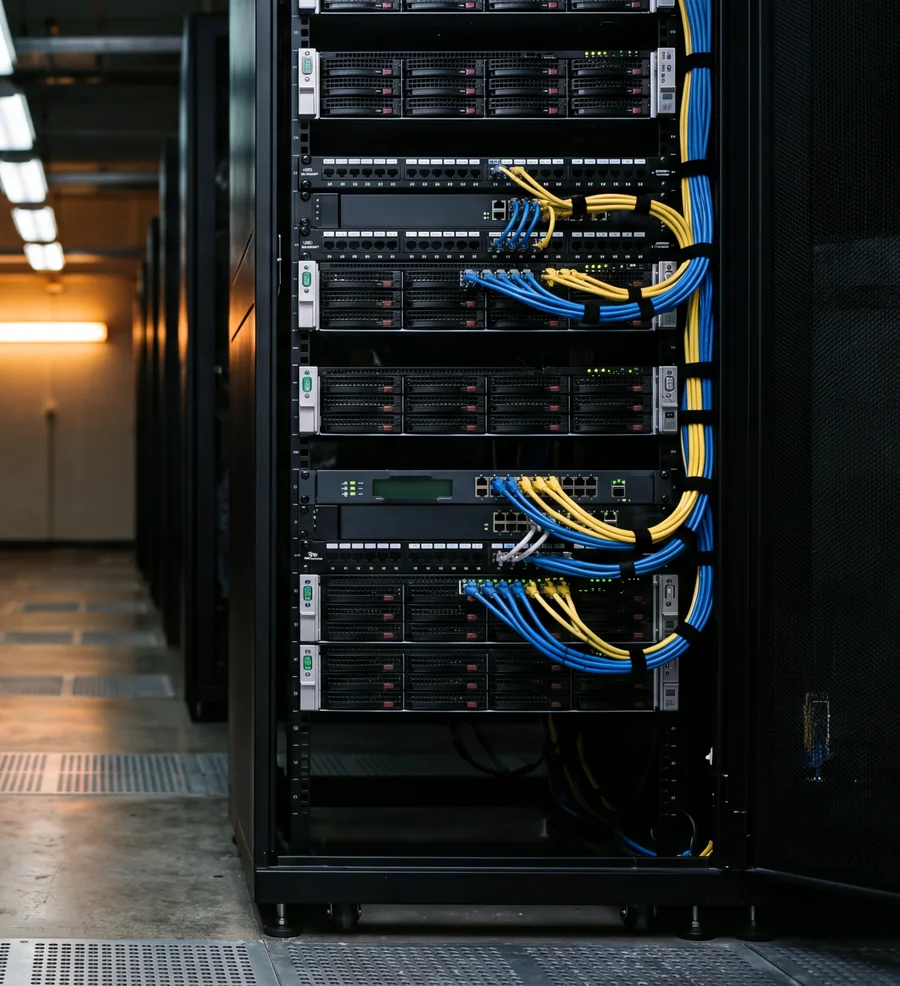
A server rack in a carrier data centre, its door open on servers, a voice gateway and dressed blue and yellow cables

Put TELRPC wherever a call can be placed.

Seven ways to deploy one rail, from an app on a phone to a module in the vault. Each shape below shows what signs, what places the call, how the signed bytes pass between them, and what we supply.

One rail, three ways to look at it: the four models say how deep TELRPC goes into your product, the seven shapes say where the key and the call sit, and the three ways in say what a developer licenses or calls.

Seven ways to deploy it.

Every shape ends the same way: an ordinary call to the grid, a broadcast to the chain, and the confirmation echo back to the caller.

Shape 1

In your app, on the user's phone

Self-serve
Signs
The phone, inside your app. Or your app receives a transaction your own signer already made.
Places the call
The same phone, on its ordinary voice line.
Hand-off
None. The signed bytes stay inside the app until they leave as tones.
TELRPC supplies
The TRP/1 protocol and the reference implementation under licence, or a whitelabel build of the TELRPC Wallet, with the Grid and the Console. The TELRPC Wallet runs this shape in production.
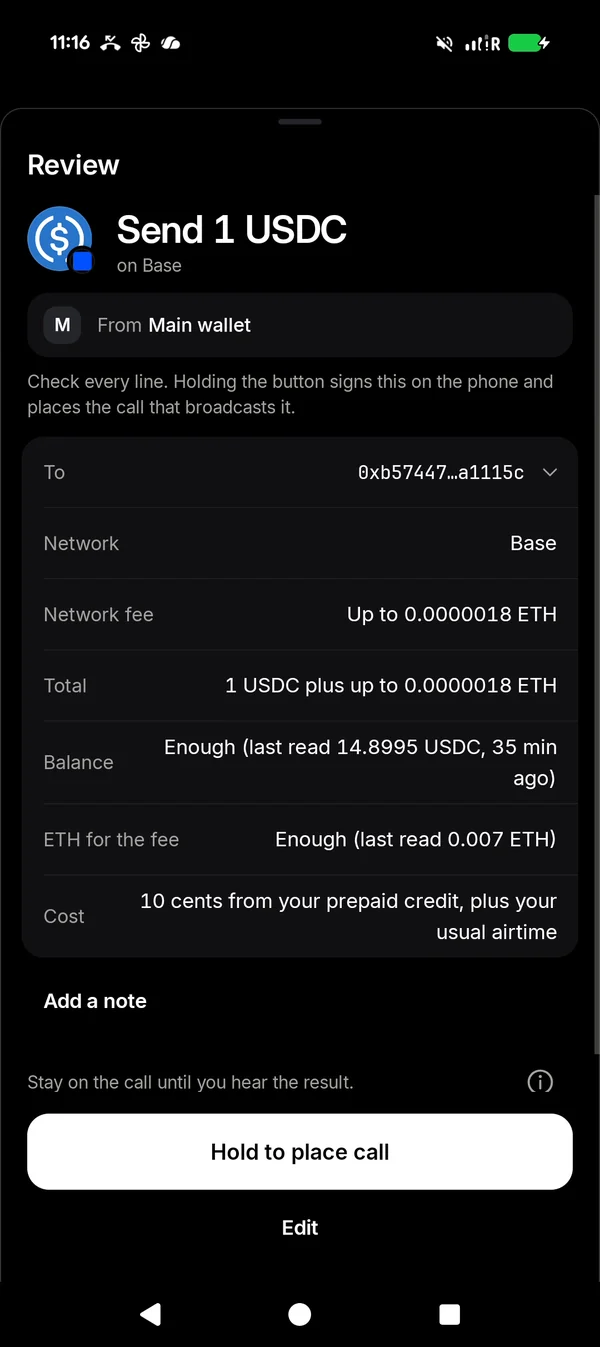
The review sheet: send 1 USDC on Base, hold to place the call
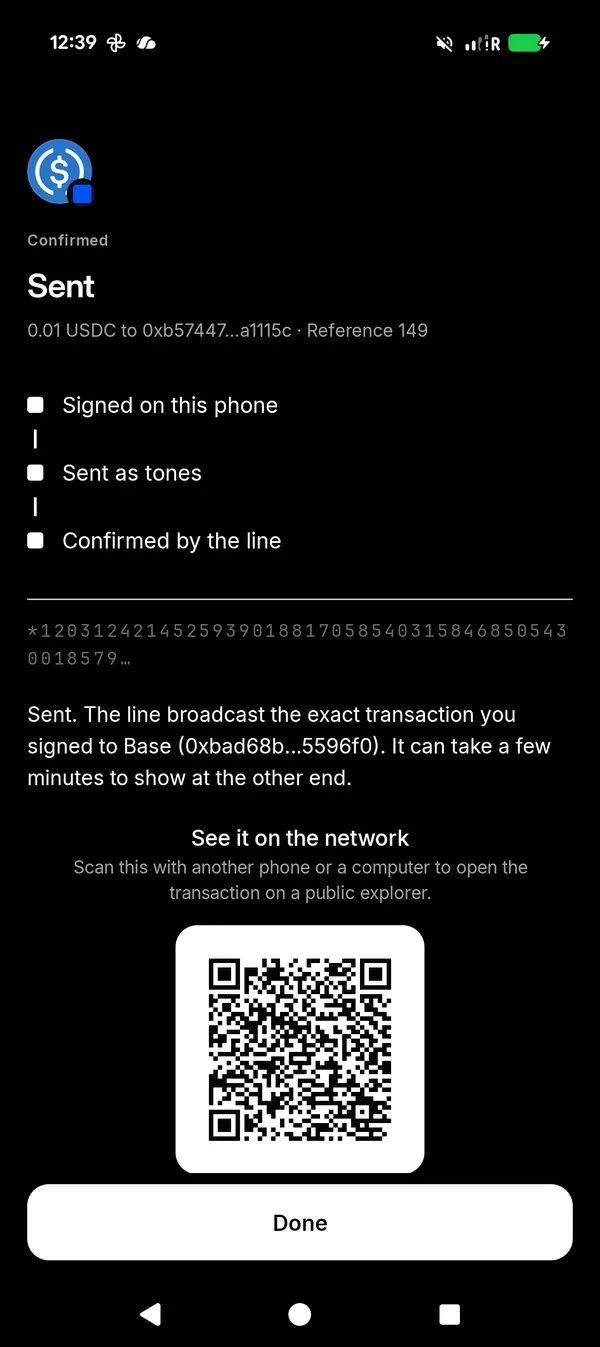
A confirmed send: signed on this phone, sent as tones, confirmed by the line
Your appcallechoGridChain
Shape 2

A companion phone for an air-gapped signer

Self-serve
Signs
Your hardware wallet, exactly as it does today. It never touches a network.
Places the call
A companion phone running the TELRPC Wallet, or your own app built on the reference implementation.
Hand-off
QR by camera, live in the TELRPC Wallet as "Carry a signed transaction". USB, Bluetooth and NFC transports are a custom deployment.
TELRPC supplies
The companion app or the reference implementation under licence, the Grid, and the state for the next send by QR or echo.
A hardware wallet beside a phone showing the TELRPC Wallet review sheet
SignerPhoneQRcallechoGridChain
Shape 3

Inside the hardware wallet

Built with our team
Signs
The hardware wallet itself.
Places the call
Two variants. The device keys its own tones through its own audio path into any phone held to it, or through a headset jack. Or the device carries its own cellular voice module and SIM or eSIM and places the call itself, with no phone at all.
Hand-off
Sound into a phone, or none: in the second variant the signed bytes leave the device only as tones on its own line.
TELRPC supplies
The frame logic for firmware under licence, engineers alongside your hardware team, numbers on the Grid, and certification under TELRPC INSIDE.
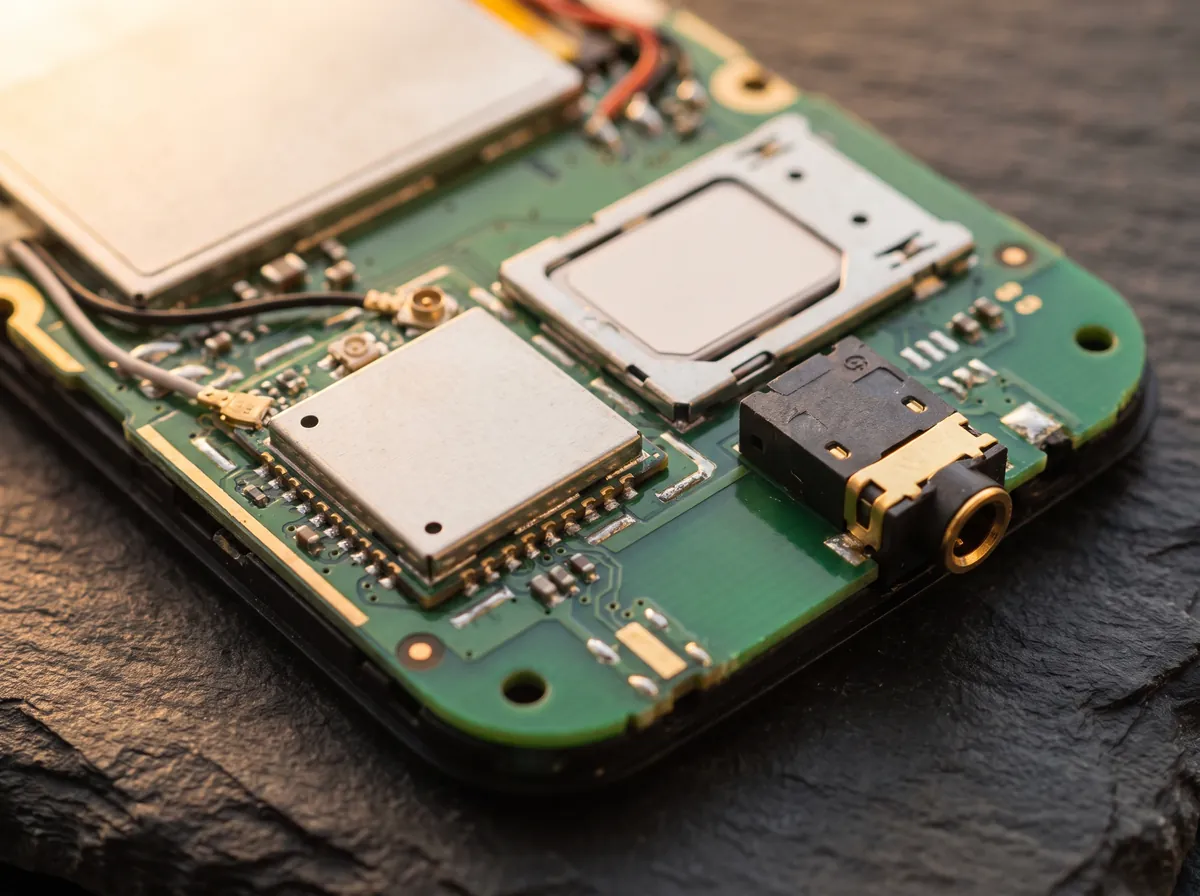
The board inside a hardware device: a shielded cellular voice module, a SIM tray and a headset jack
SignerAny phonetonescallechoGridChainWallet + SIMcallechoGridChain
Shape 4

On the SIM or eSIM

Built with our team
Signs
Your wallet or signer. The SIM is already a secure element in every phone and every cellular module.
Places the call
Any handset holding the SIM, even a basic phone. Standard SIM toolkit commands let a SIM place a call and send tones.
Hand-off
Inside the handset, to a SIM-resident TELRPC applet that carries the frame.
TELRPC supplies
The applet, engineered with you and issued with a mobile-operator partner, and the Grid. Minutes Network is a carrier business, which is why this shape exists.
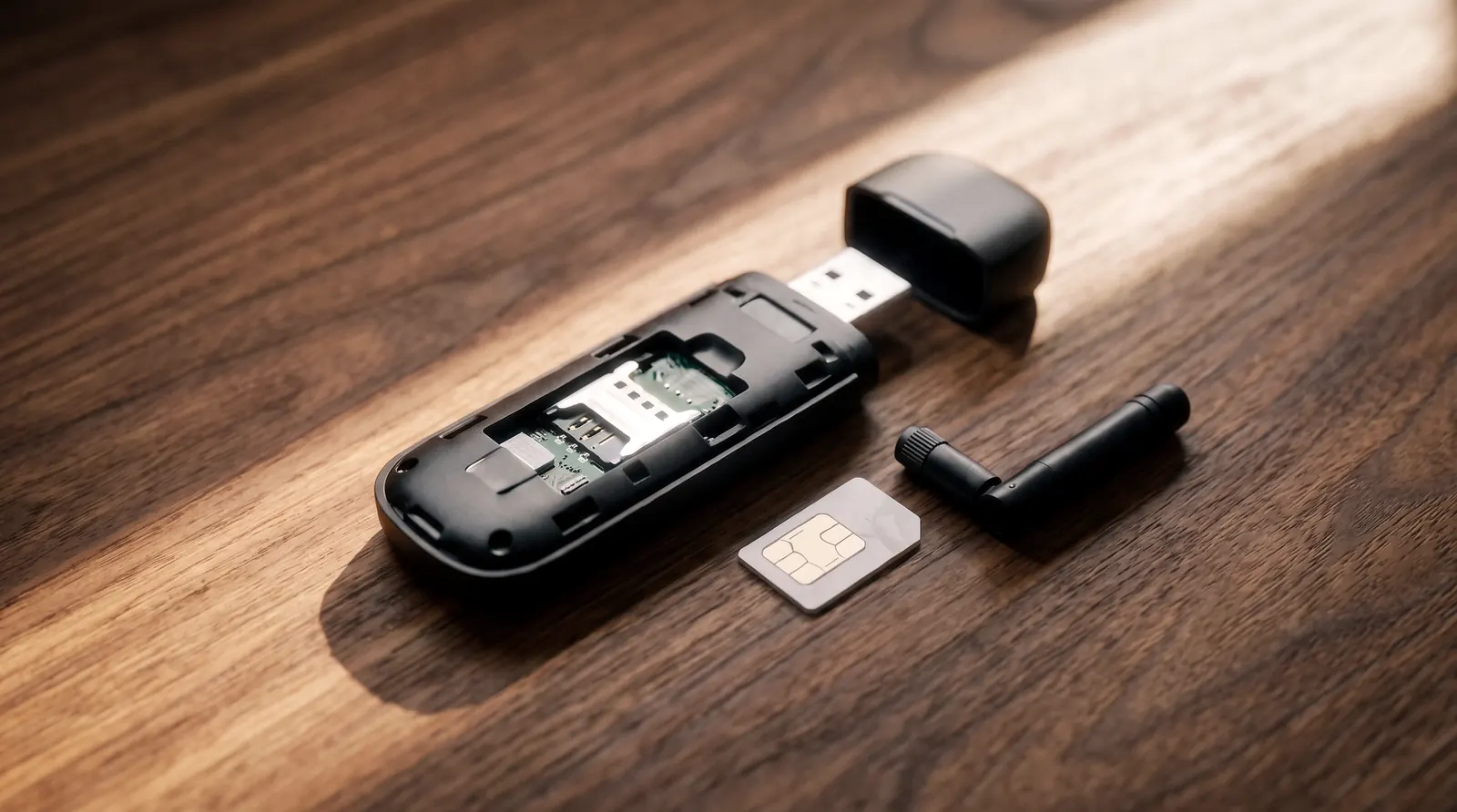
A cellular voice stick opened beside its SIM card and antenna
SIMHandsettoolkitcallechoGridChain
Shape 5

An institution's dedicated handsets

Self-serve
Signs
The treasury's signing system: HSM, MPC or multisig, under the policy you run today.
Places the call
A small fleet of locked-down handsets with no internet permission, kept in your treasury room. The Console enrols the treasury signing addresses they carry for.
Hand-off
QR, from the signing system's screen to the handset's camera.
TELRPC supplies
The handset app, the Grid, and the Console: an allowlist of treasury addresses that broadcast on your account's term, a seat register recording each person's admin, operator or viewer role, and an audit log with CSV export.
The Console for institutions
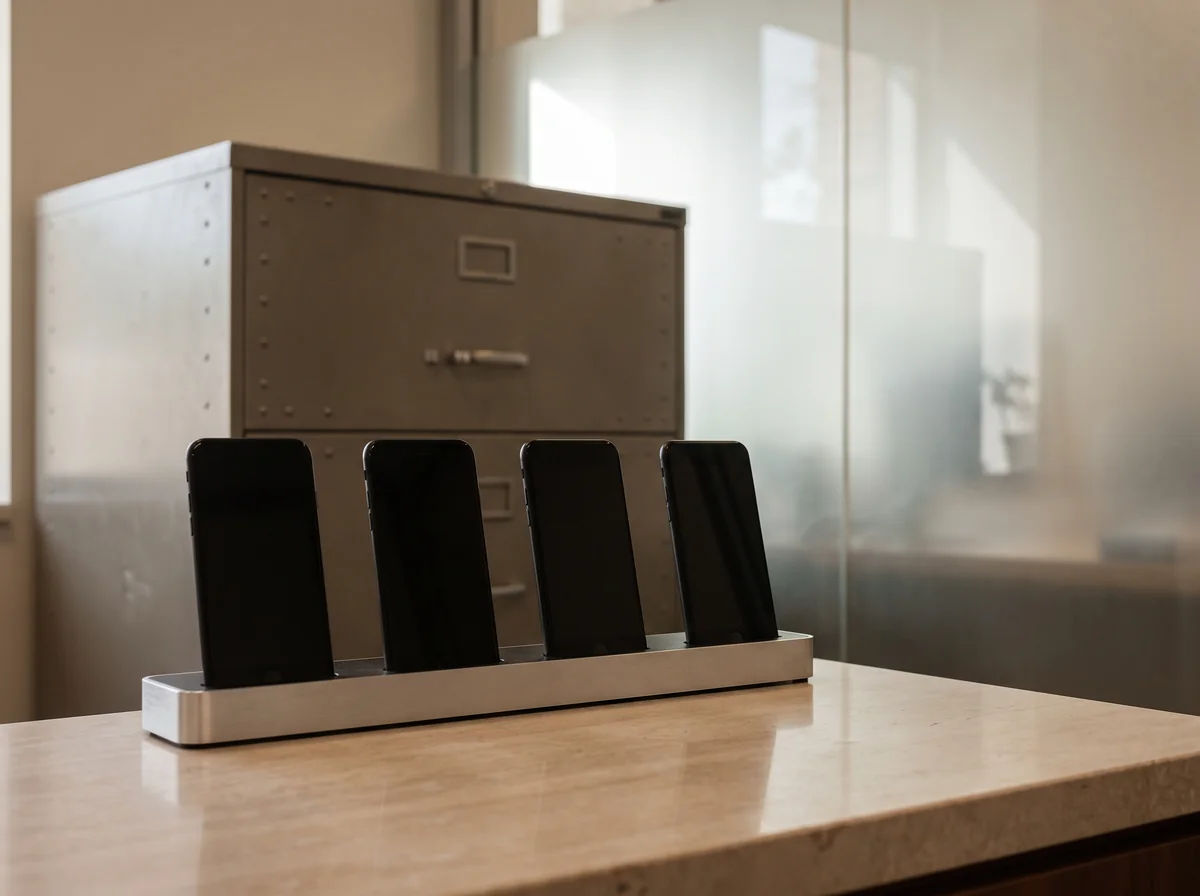
Four handsets standing in a charging dock on a stone desk in a treasury room
HSM / MPCHandsetQRcallechoGridChain
Shape 6

A treasury module in the vault or data centre

Built with our team
Signs
Your HSM or signing server.
Places the call
A purpose-built appliance: a cellular voice module with a SIM, or an analogue or private line, running our firmware. No IP stack faces outward.
Hand-off
A one-way input from the signing system: a data diode, a serial link or a QR.
TELRPC supplies
The appliance design and its firmware, numbers on the Grid, and the confirmation echo returned to the module.
A server rack with its door open in a data centre aisle
HSMModuleone-waycallechoGridChain
Shape 7

A private trunk for the data centre

Built with our team
Signs
Your signing system.
Places the call
The telephony your desk already runs.
Hand-off
From your signing system to your telephony, inside your own perimeter.
TELRPC supplies
A dedicated private trunk on Minutes Network's carrier network into the Grid, with dedicated numbers, so the call never crosses the public internet.
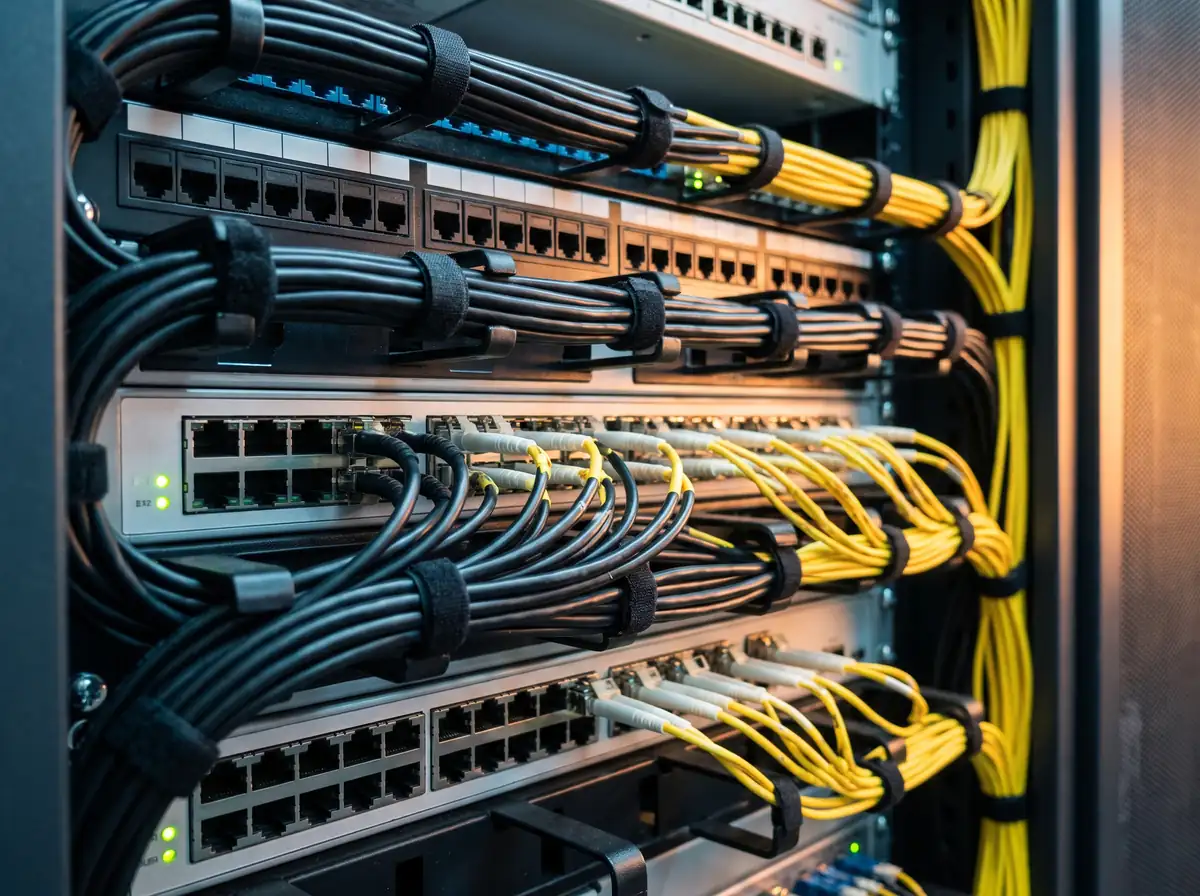
Carrier equipment: a voice gateway and patch panels with dressed cables and green status lights
SignerDesk linetrunkechoGridChain

Who uses which shape.

Exchange

Shapes 5, 6, 7 and 1

Cold-storage withdrawals and treasury rebalancing, broadcast from the cold side with no networked broadcast host. The cold signer produces the transaction; a treasury handset carries it today, and a vault module or a private trunk takes the same path inside the data centre. When the internet or a cloud provider is down, withdrawals continue anywhere a call can be placed. And the rail goes into the exchange's own consumer wallet app, under licence, so its customers broadcast with no data too.

Custodian or bank

Shapes 6, 5 and 7

Client asset withdrawals signed in the HSM and carried by a module or a dedicated handset. Duties stay segregated: the signing system signs, the carrying device carries, the grid broadcasts, and a change at any layer is refused, because a changed byte fails the signature or the checksum. Examiners get a time-ordered audit log of every change and every broadcast, with CSV export. Continuity planning gains a path that does not depend on the internet.

Asset manager, fund or corporate treasury

Shapes 5 and 7

Settlement from a vault workflow. The treasury signs as it does today, a handset in the treasury room carries the transaction, and allowlisted treasury addresses broadcast on your account's term. The Console keeps a seat register with each person's admin, operator or viewer role; usage reads against a committed-capacity package sized to your volume; the audit log and the capacity statement export to CSV.

Hardware-wallet maker

Shapes 2, 3 and 4

Finish the air gap your customers were promised. The companion-phone shape ships today, with QR import live in the TELRPC Wallet or in your own app built on the reference implementation. The call moves into the device itself, or onto the SIM, in an engagement with our engineers. Wholesale pricing per broadcast with your own resale price on top, the Console to manage your clients and their addresses, and the TELRPC INSIDE mark on the box.

Consumer app

Shape 1

A wallet or payments app builds on the reference implementation under licence, or launches a whitelabel build of the TELRPC Wallet under its own name. Its users send with no data plan, on 2G or in a blackout, and pay 10 cents of prepaid credit for each call request, charged only when it succeeds. Sends are never charged a percentage. Every fee is shown on the review before a swap.

What every shape shares.

The same signed bytes, a grid that holds no key that can move your funds (its only keys are operational: a Solana co-signer limited to one fixed setup template, and a small fee-payer for setup slots), no contract on any chain, confirmation by echo, calls that heal themselves, and an audit trail of every broadcast in the Console. See one payment, end to end

  • The same signed bytes, valid by their bytes, not their channel
  • A grid that holds no key to your funds
  • No contract on any chain
  • Confirmation by echo, checked on the device
  • Calls that heal themselves, landing only once
  • An audit trail of every broadcast in the Console

Tell us your device.
We bring the shape.

One message starts it: the device that holds your key, the device you want to place the call, and the markets you serve. We reply with the brief, the integration guide and a live test line.